What Happens When Stories Stop Travelling?
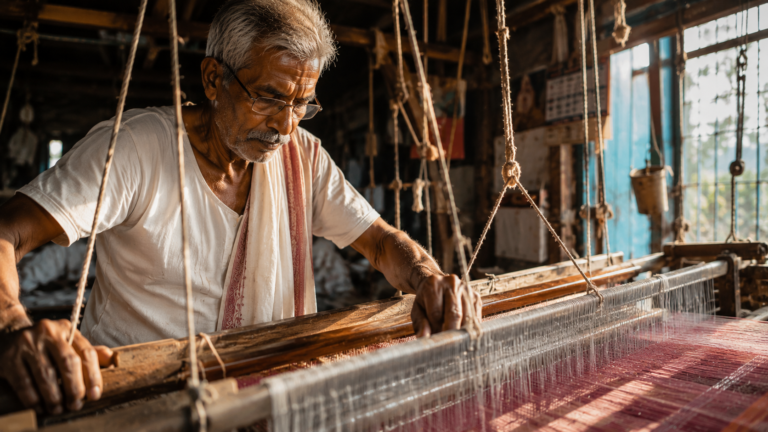
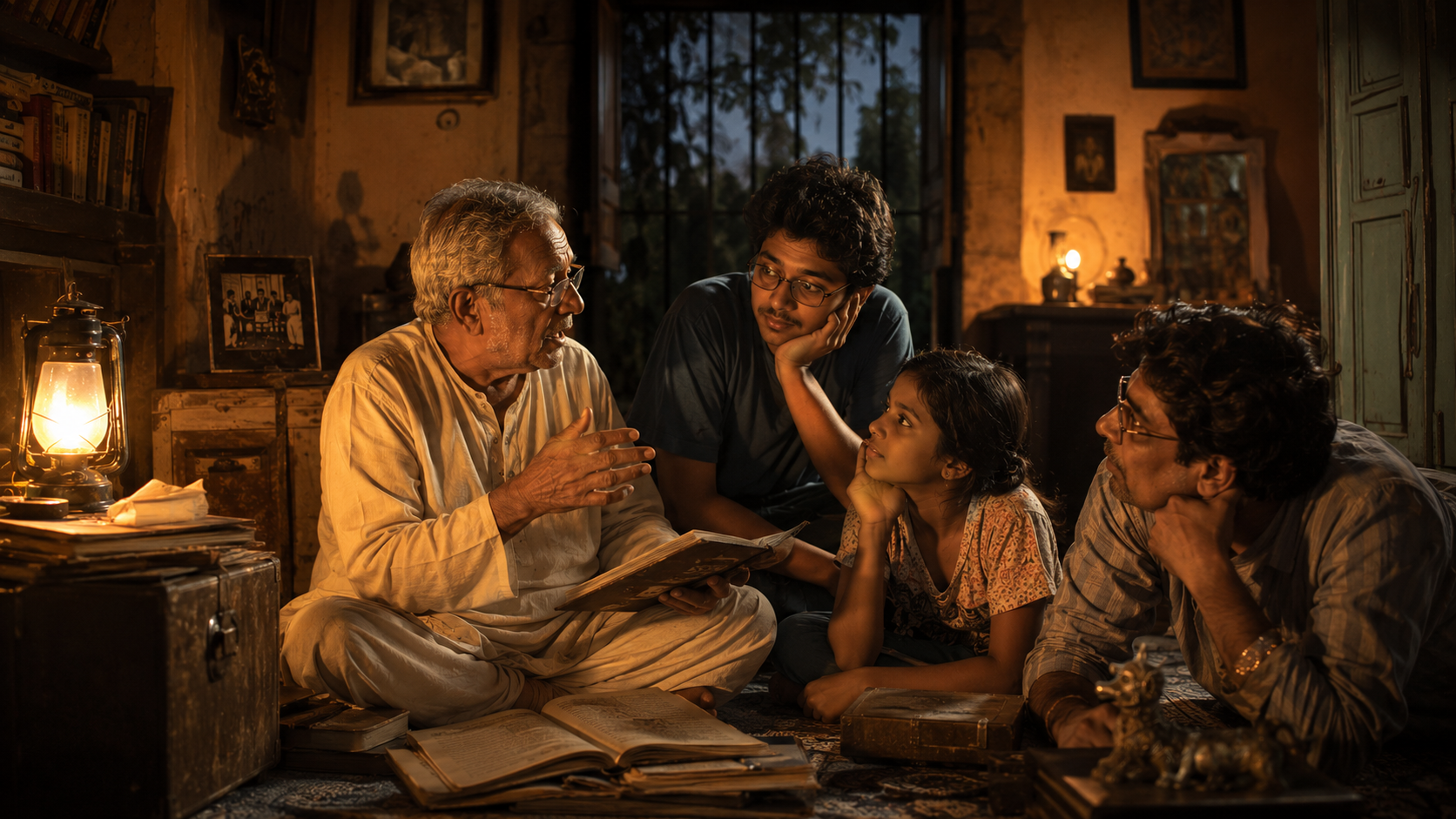
Think about how we learn the things that truly matter. It rarely happens in a formal classroom or through deliberate instruction. More often, it happens in the background of everyday life. A grandmother teaches a recipe without ever calling it a lesson. A weaver adjusts a loom while an apprentice quietly observes. A neighbour explains why a particular lane carries an unusual name. A parent repeats a story they once heard from someone before them. These moments may seem ordinary, but they perform an extraordinary function. They carry knowledge across generations.
We often think of culture as a collection of artifacts—monuments, museums, documents, and preserved traditions. Yet culture is not simply something we inherit. It is something that moves. It travels through conversations, practices, skills, rituals, memories, and shared experiences. Culture survives because stories continue to travel from one person to another. This raises an interesting question: what happens when those stories stop travelling?
The answer is rarely dramatic. Cultural transmission does not usually disappear overnight. It fades gradually. A recipe is replaced by convenience and forgotten within a generation. A local story is no longer told, and the place it once explained becomes just another point on a map. A craft loses its apprentices. A festival continues, but its meaning slowly disappears from public memory. Cultures rarely disappear because people actively reject them. More often, they disappear because the transmission quietly breaks down. When stories stop travelling, communities lose more than information. They lose context. Traditions become disconnected from the people who created them. Places become separated from the histories that shaped them. Knowledge that once lived comfortably within everyday life slowly drifts out of reach.
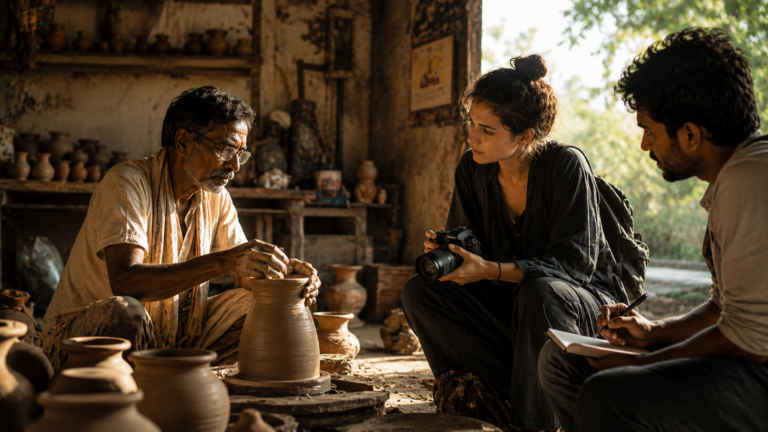
Across Bengal, this process can be observed in both subtle and visible ways. Consider the making of goyna bori in parts of Midnapore. On the surface, it is a culinary tradition. Yet the practice has historically been much more than a method of preparing food. It is a social ritual where techniques, stories, relationships, and community memory are passed between generations. The recipe survives because the experience surrounding it survives. Or consider the patuas of Naya village, whose painted scrolls are inseparable from the songs that accompany them. Their work depends not only on artistic skill but also on the transmission of narrative, performance, and collective memory. The art form remains alive because each generation continues to learn, adapt, and retell the stories in its own way.
What makes these traditions valuable is not their age. It is their movement. Culture remains relevant when it continues to participate in contemporary life. This is why nostalgia can sometimes be misleading. We often speak about preserving culture as though it were a fragile object that must be protected from change. But living cultures have never remained static. They evolve continuously. New influences arrive. Old practices adapt. Traditions acquire new meanings. A traditional craft survives not by refusing to change, but by finding relevance in a changing world. A folk song survives because someone finds a reason to sing it today. A local story survives because it continues to resonate with people who did not originally inherit it.
The danger is not change. The danger is silence. When a tradition stops being shared, discussed, practiced, or reinterpreted, it begins to lose its place within everyday life. It may still exist in archives, museums, and memory, but it no longer performs its original role as a living part of a community. Stories do more than preserve the past. They help people make sense of the present. The narratives we inherit explain how communities adapted to challenges, how landscapes were understood, how relationships were formed, and how knowledge was accumulated over time. They provide continuity in a world that often feels increasingly fragmented. Without these connections, places can become unfamiliar even to the people who live within them. Communities continue to exist, but the shared understanding that once connected generations becomes weaker. We occupy the same geography while losing sight of the stories that gave it meaning.
This is why cultural transmission matters. Not because every tradition must remain unchanged. Not because the past should be romanticised. And not because culture belongs behind glass. It matters because stories create continuity. They connect people to places, communities to memory, and inherited knowledge to future possibilities. When stories continue to travel, they do more than preserve identity. They create opportunities for renewal. Old ideas find new audiences. Traditional skills find new applications. Communities discover new ways of understanding their own value. The traditions that endure are often the ones that remain connected to contemporary life while retaining a sense of where they came from.
Every story that survives has travelled through someone’s voice, hands, memory, or practice. Every tradition that remains alive exists because someone chose to pass it forward, and someone else chose to receive it. We all inherit stories from the people and places that shaped us. The question is not whether we carry them. The question is which ones we choose to pass on.
Editor’s Note
This article is part of an ongoing series exploring places, people, culture, and ideas through the lens of discovery, visibility, and opportunity.