Category
History
Events, movements and turning points that shaped Bengal.
-
The River That Changed Bengal's Capital
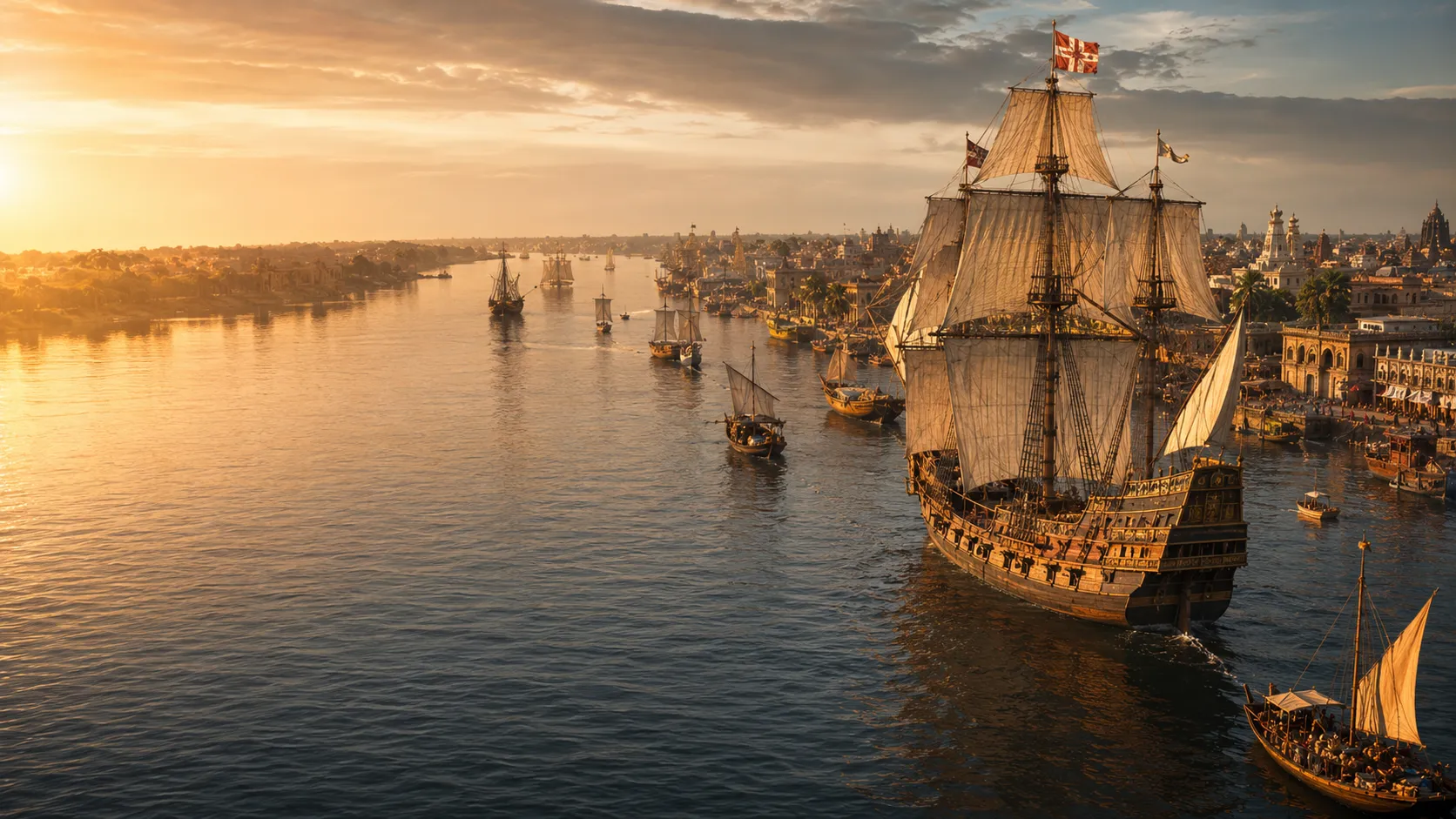
As the Bengal Saraswati weakened and the Hooghly became more important, Bengal’s commercial geography shifted downstream. Saptagram gradually lost its advantage as changing river channels made navigation harder, while Hooghly emerged as a stronger centre for maritime trade. This environmental shift helped reshape the network of ports and settlements from which Calcutta eventually emerged.
-
The River That Made Saptagram
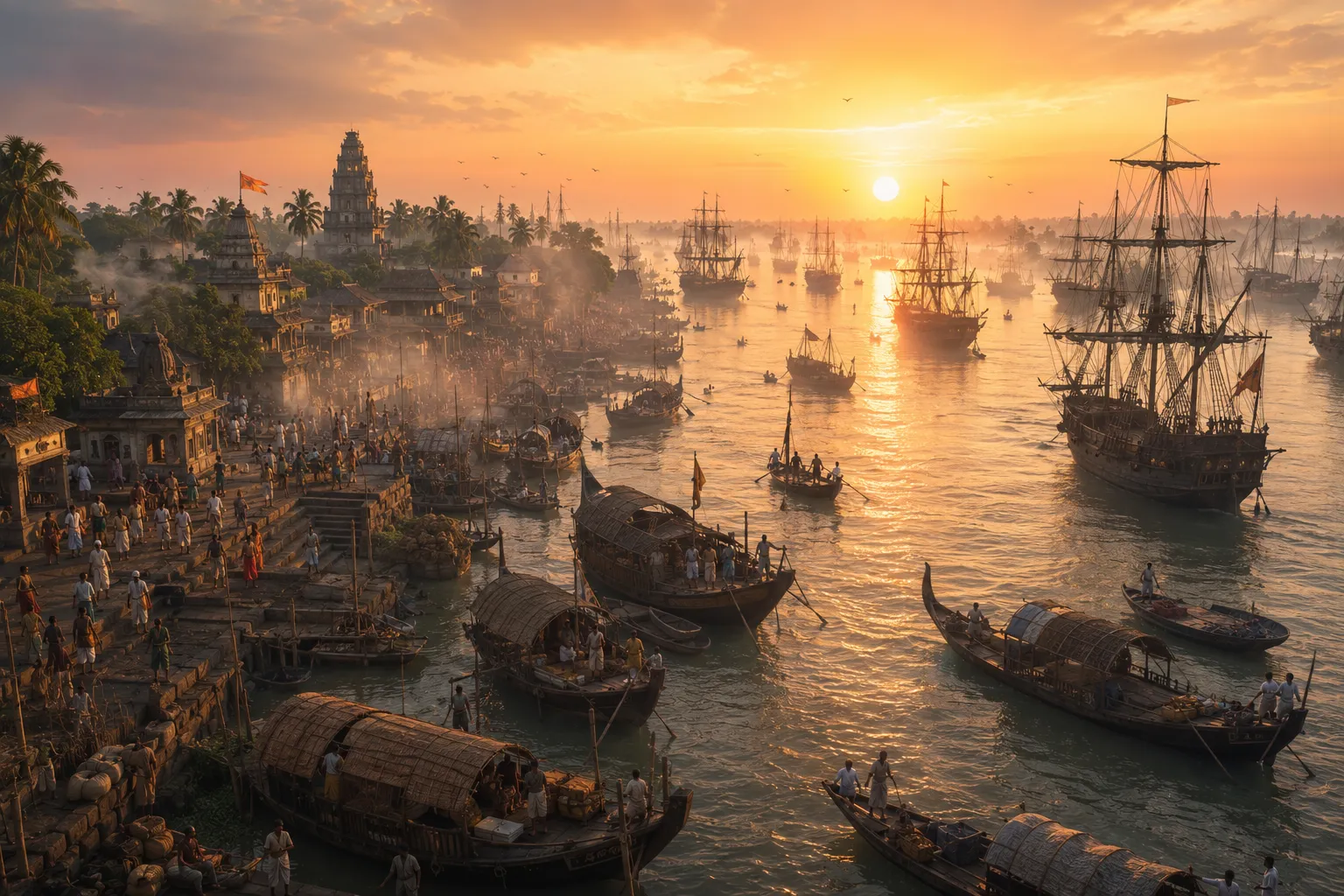
Saptagram, on the Bengal Saraswati, grew into one of medieval Bengal's great commercial centres, gaining administrative and mint status under Muhammad bin Tughluq and drawing Portuguese merchants like Tomé Pires by the sixteenth century. As the Saraswati silted and trade shifted to the Hooghly, the city's advantage and its fortunes gradually declined together.
-
The Private Papers Behind the Partition of Bengal
The British defended the 1905 partition of Bengal as an administrative necessity. But confidential correspondence among the officials shaping the new map reveals another consideration: they were thinking carefully about what might happen to Bengal’s political power once its eastern and western districts were no longer joined.
-
When Bengal Was Divided, Dacca Saw a Future
For many in western Bengal, the 1905 Partition looked like the destruction of a political homeland. In Dacca, some Muslim leaders saw something very different: a new province, a new capital and the possibility of political influence that had long seemed concentrated elsewhere.