All stories
Every published Know Bengal article, newest first — research-based writing on Bengal’s history, economy, people, culture, places and ideas.
-
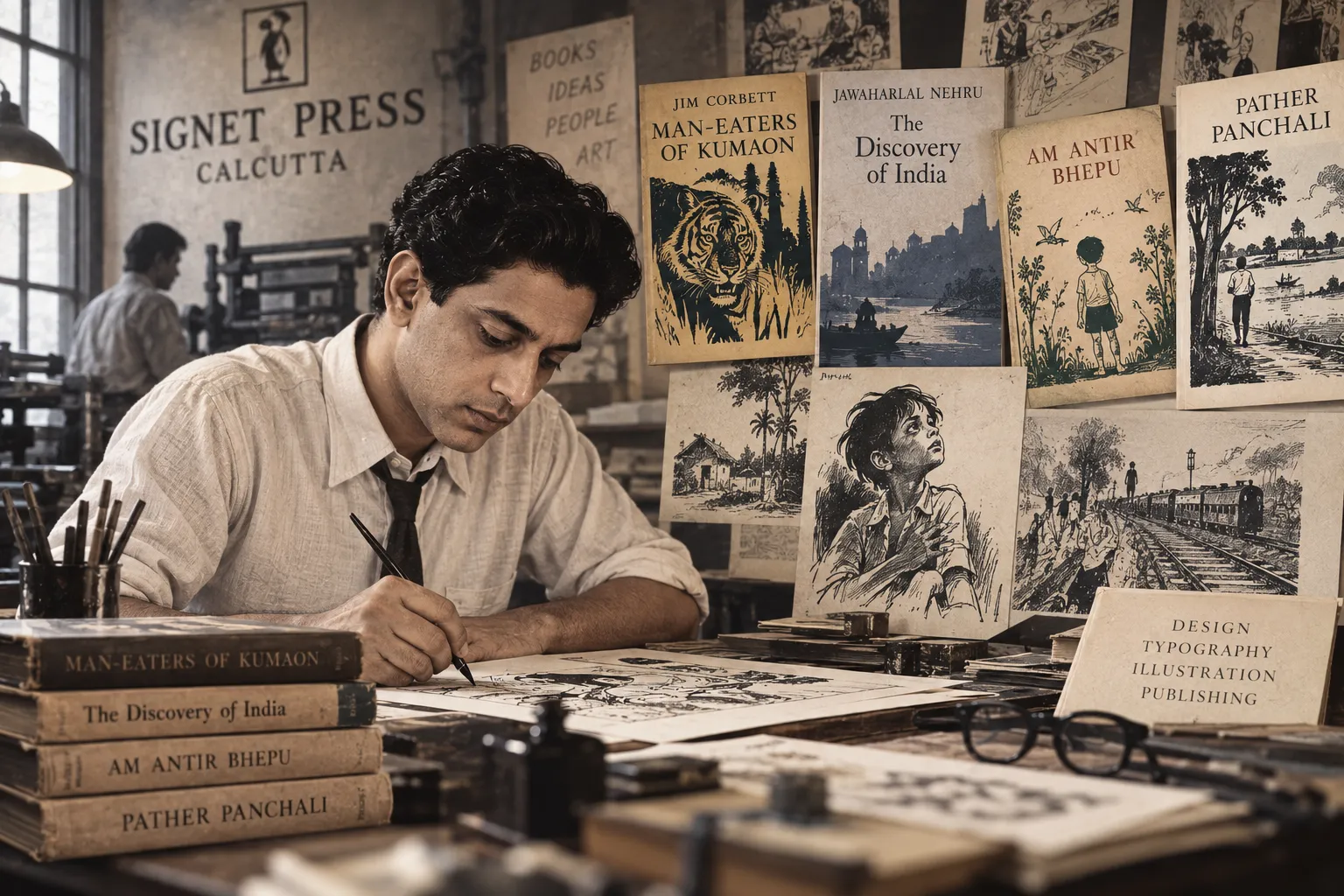
Before Satyajit Ray Made Films, He Designed How Bengal Read
Satyajit Ray is remembered in Bengal as a filmmaker and writer, but his visual imagination was shaped before he made his first film. At Signet Press, he learned to communicate through book covers, illustration and typography, and his work on Bibhutibhushan Bandyopadhyay’s Pather Panchali helped lead him towards cinema. The printed page came before the camera.
-
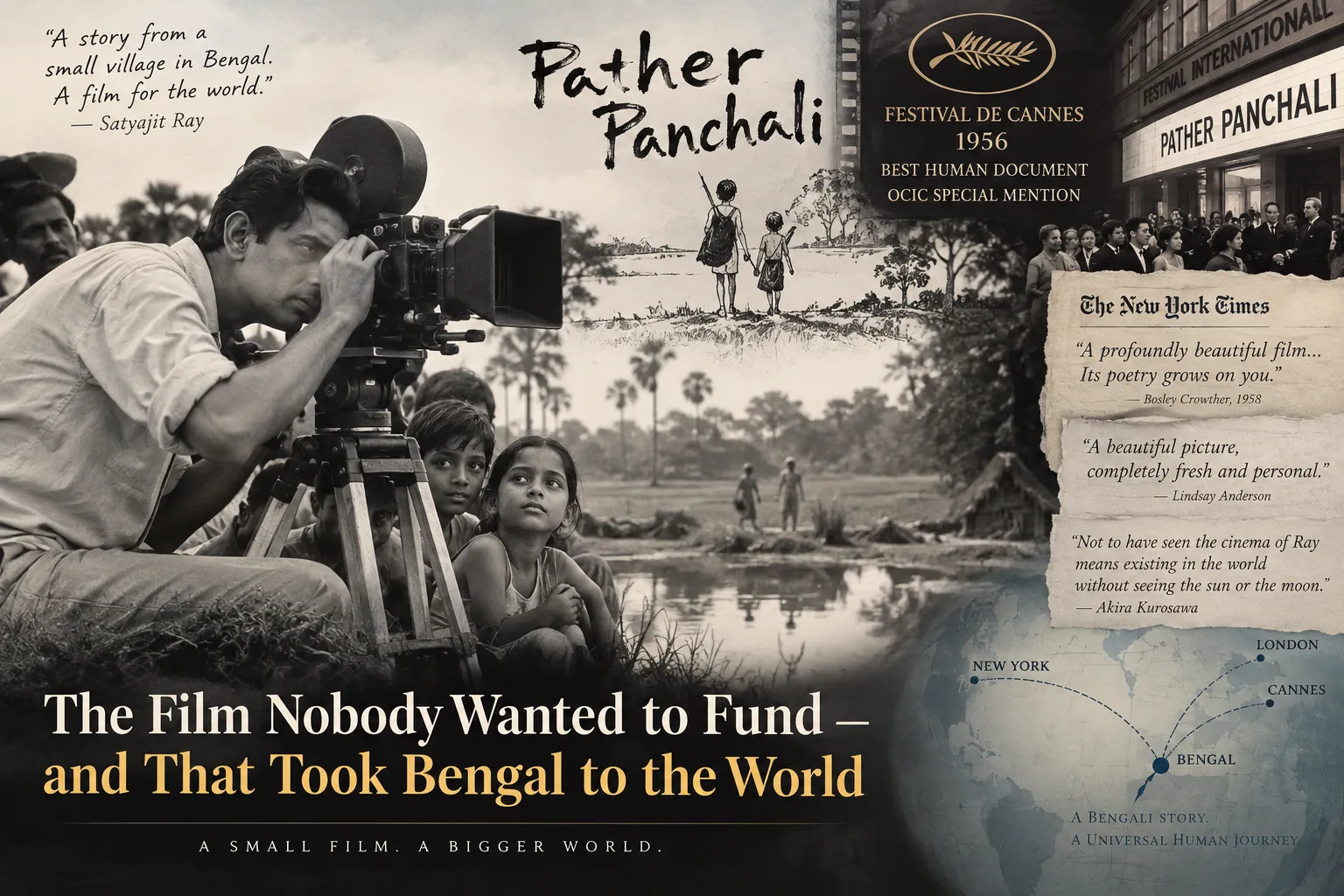
The Film Nobody Wanted to Fund — and That Took Bengal to the World
The making of Satyajit Ray’s Pather Panchali was a struggle from the beginning: money ran out, production stalled and the first-time filmmaker had to risk his family’s security to keep going. Then the film travelled from Bengal to Cannes and beyond, winning extraordinary acclaim while provoking serious criticism about poverty, pace and representation.
-
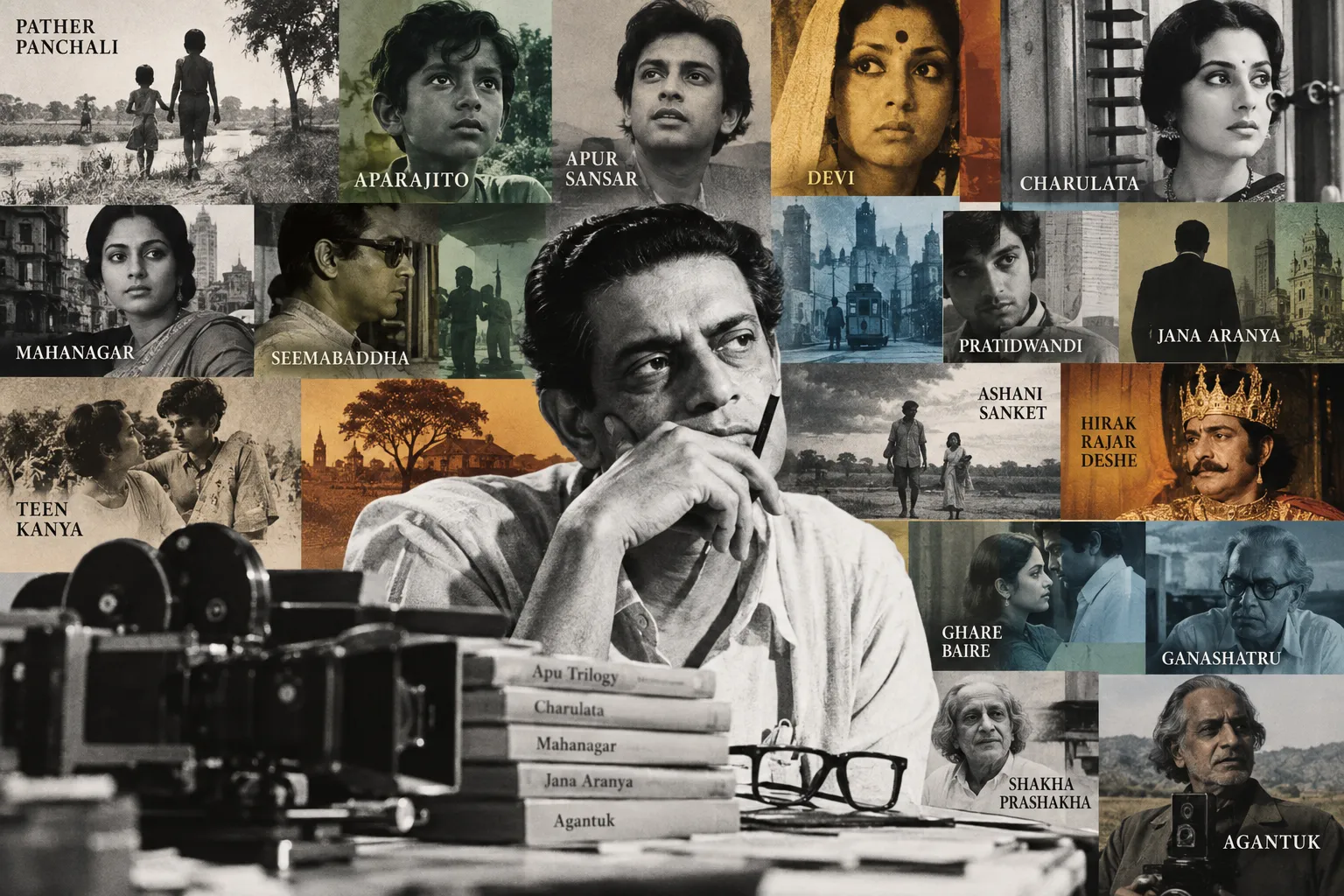
The Filmmaker Who Saw Bengal Differently
Satyajit Ray’s cinema changed as Bengal changed. From the villages of the Apu Trilogy to Calcutta’s working women, political anxiety, moral compromise and the philosophical questions of Agantuk, Ray kept returning to one concern: how people behave when the world they know begins to change. His filmography becomes a portrait of Bengal in motion.
-
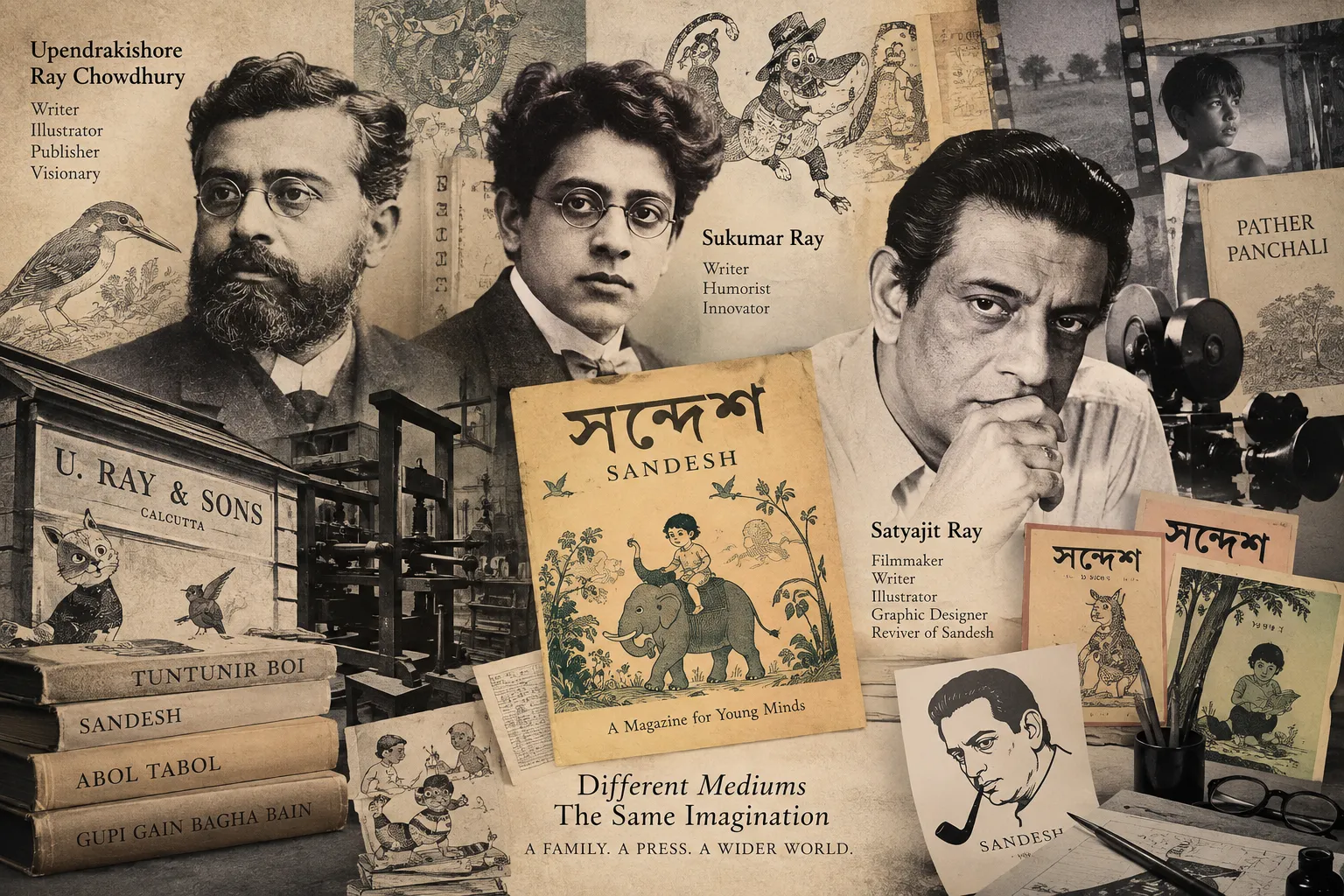
The Printing Press That Made Modern Bengali Imagination
Long before Satyajit Ray became a world-famous filmmaker, his family was reshaping how Bengal read and saw. From Upendrakishore Ray Chowdhury’s pioneering U. Ray & Sons press to Sukumar Ray’s illustrations and Satyajit’s revival of Sandesh, three generations carried the same creative inheritance across printing, literature, graphic design and eventually cinema.
-
When Computers Became the Enemy
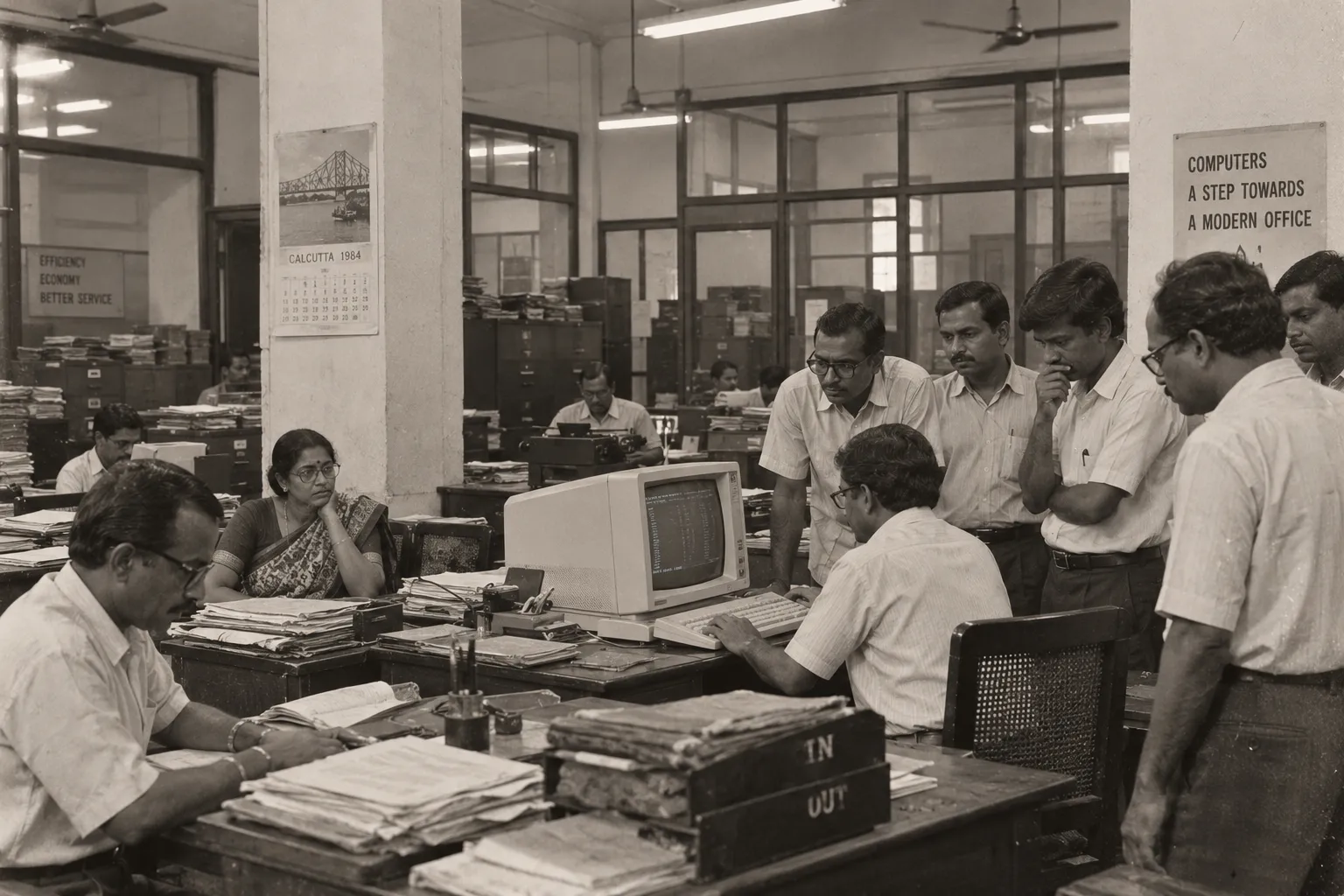
In the 1980s, computerisation became a flashpoint in Bengal’s debate over jobs, technology and the future of work. Workers feared automation could make their roles unnecessary, while employers saw greater efficiency as essential. The computer eventually became ordinary infrastructure. Today, its history offers Bengal a quieter lesson about understanding transformative technology before it becomes unavoidable.
-
The Factory Was There. The Owners Were Not.
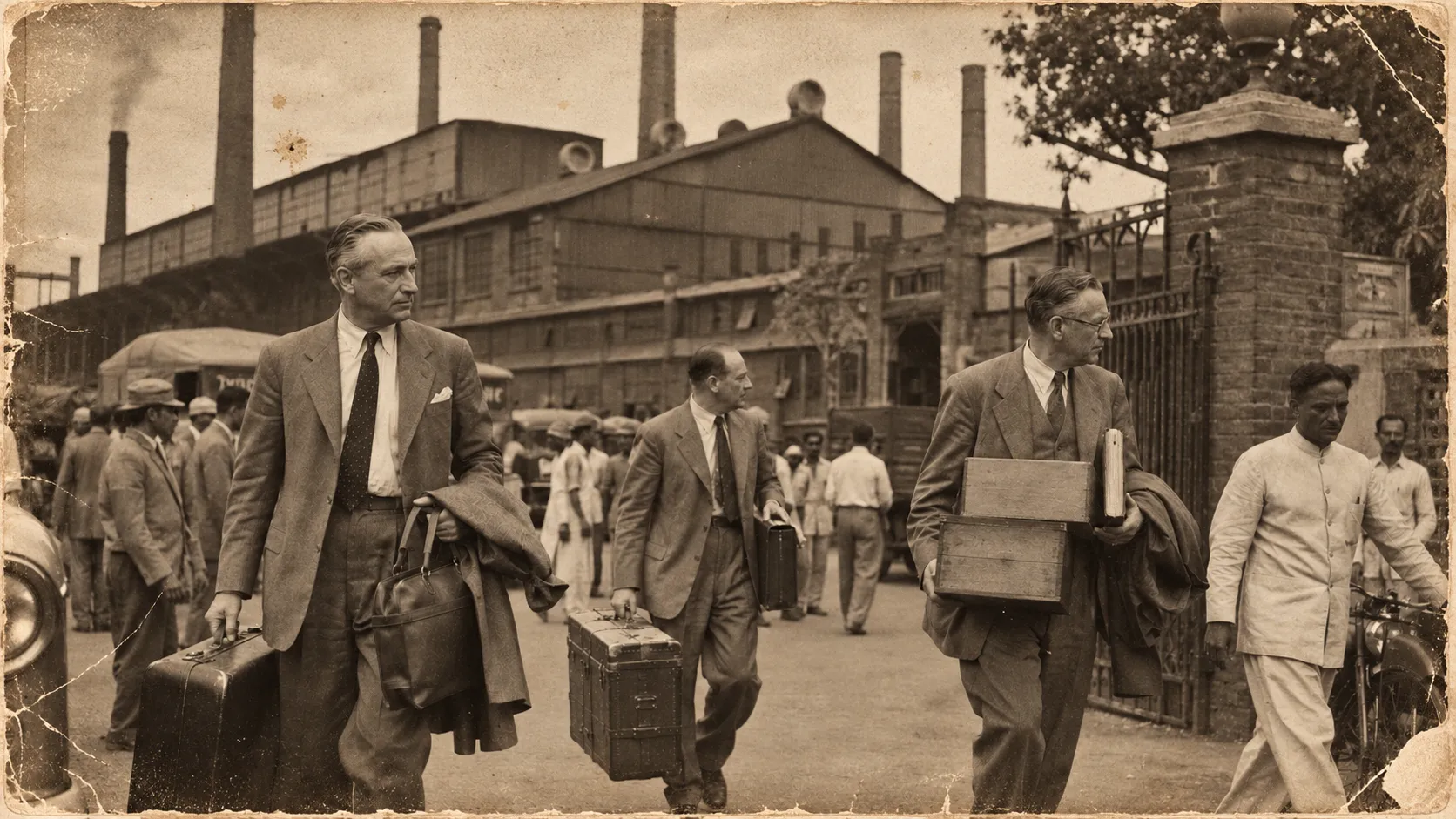
Calcutta had factories, banks, engineers and managers, yet after Independence much of Bengal’s industrial ownership began changing hands. British business houses withdrew, while Bengali professionals often remained employees rather than owners. The story of Bengal’s industrial decline is therefore also a story about capital, commercial networks and a society whose expertise did not always become ownership.
-
The Freight Policy That Changed Bengal’s Industrial Future
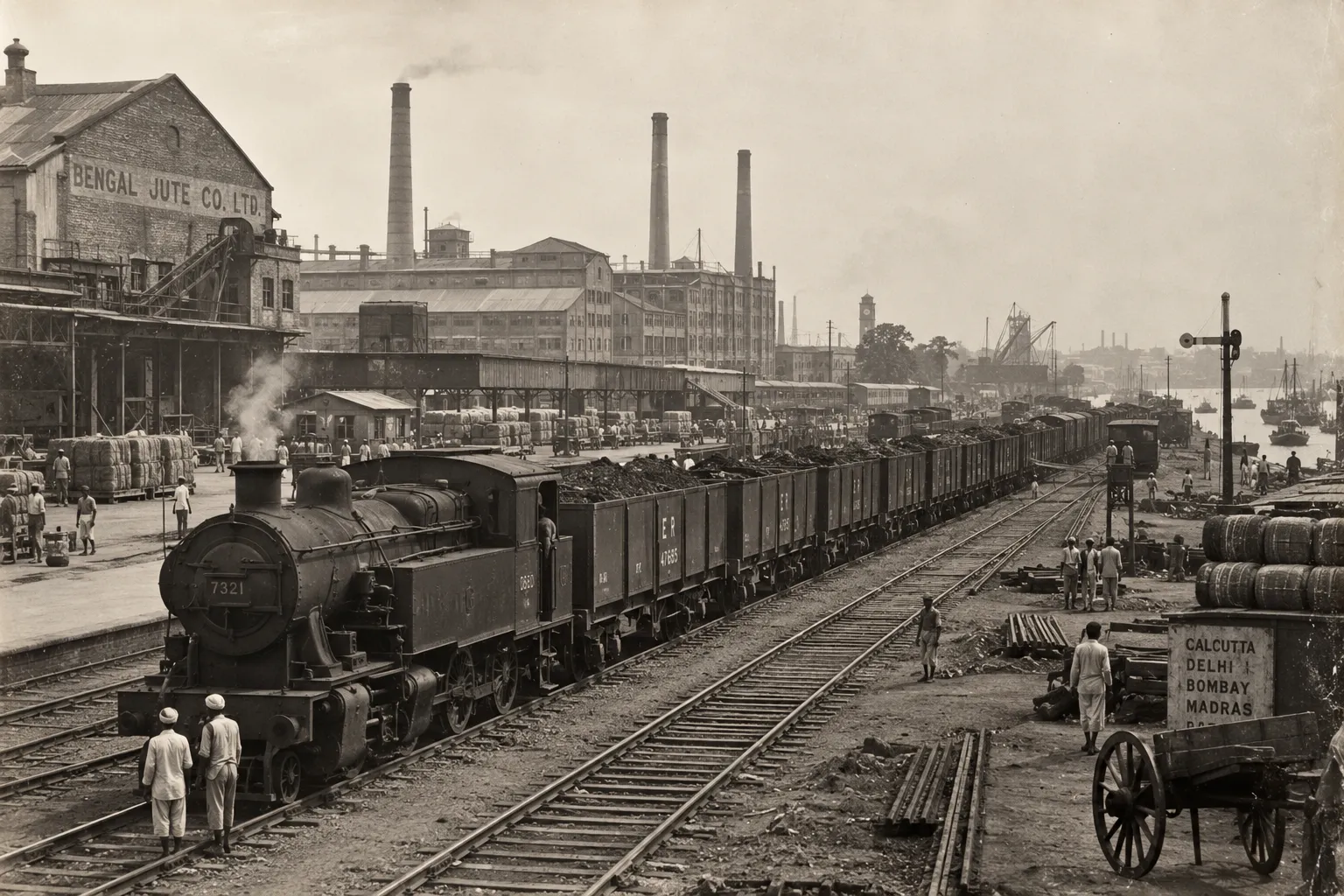
For decades, Bengal’s industrial advantage came partly from geography: coal, iron and steel were relatively close to its factories. In 1952, a national freight policy began equalising the cost of transporting key raw materials across India. The policy encouraged industrialisation elsewhere, but it also weakened one of Bengal’s most important advantages in attracting new factories and investment.
-
The Refugees Who Built a City Without Being Given One
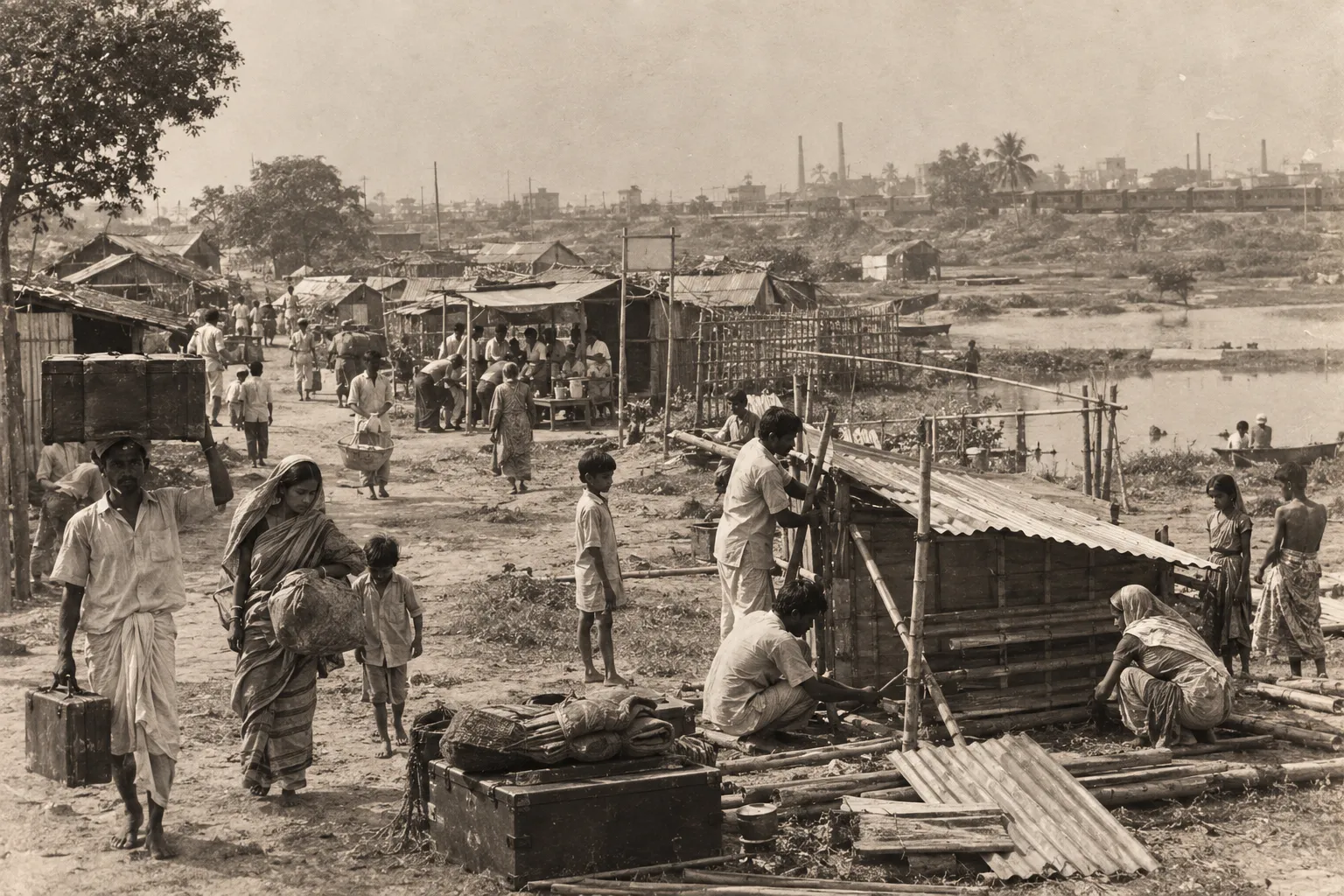
When Partition brought millions of refugees from East Bengal into West Bengal, Calcutta had neither enough housing nor a ready-made plan for their arrival. Families occupied land, built shelters and gradually created schools, markets and neighbourhoods. What began as a crisis of displacement became an extraordinary story of self-built urban life and the remaking of post-Partition Bengal.
-
When Bengalis Stopped Wanting to Be Merchants
For generations, ambitious Bengali families increasingly saw education, professional employment and secure salaries as safer routes to status than commerce. The change did not make Bengalis incapable of business; it changed what success meant. From the Permanent Settlement and the rise of the bhadralok to the post-1947 transfer of industrial ownership, Bengal’s economic history was shaped by a culture of ambition.
-
When Calcutta Lost Its Companies
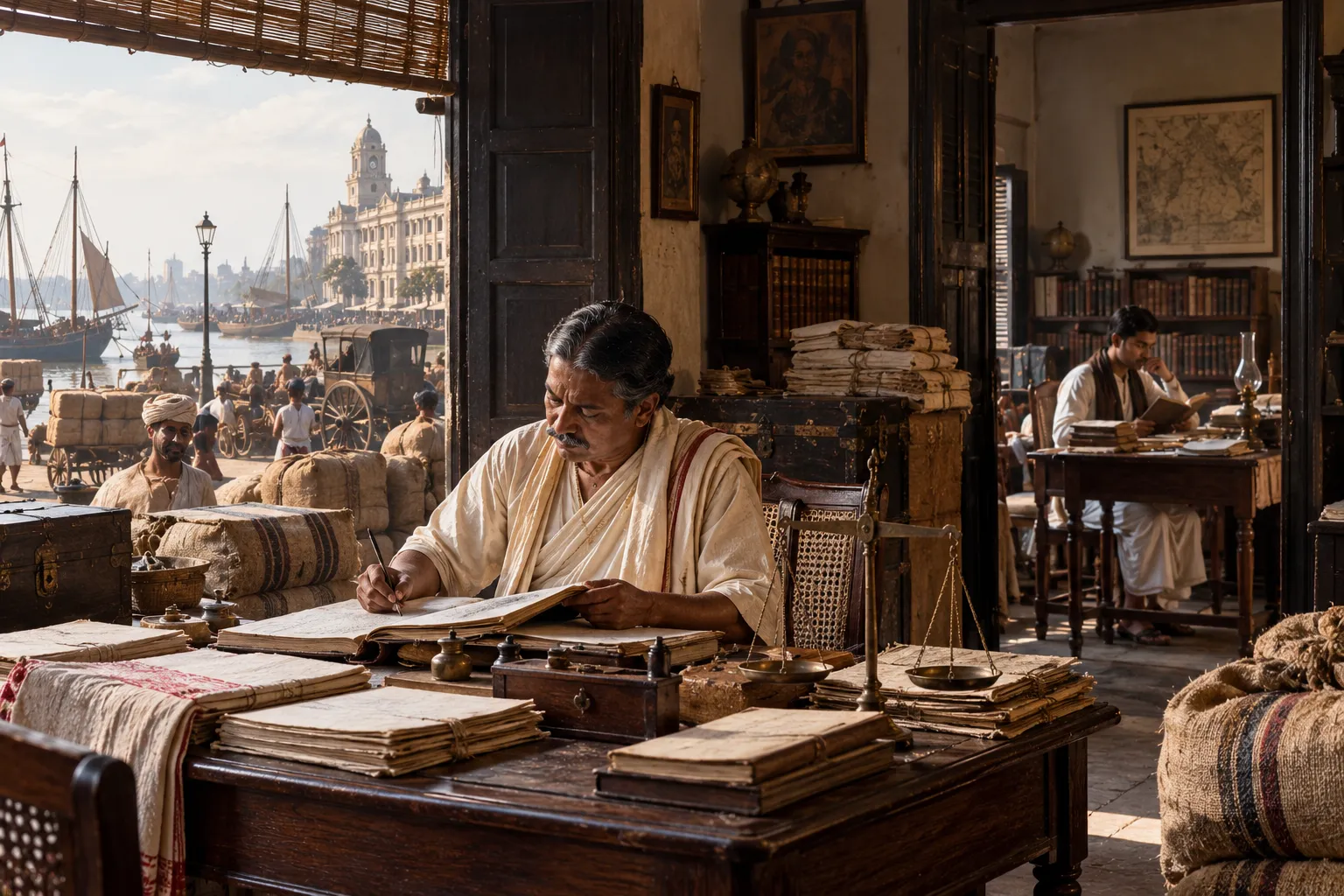
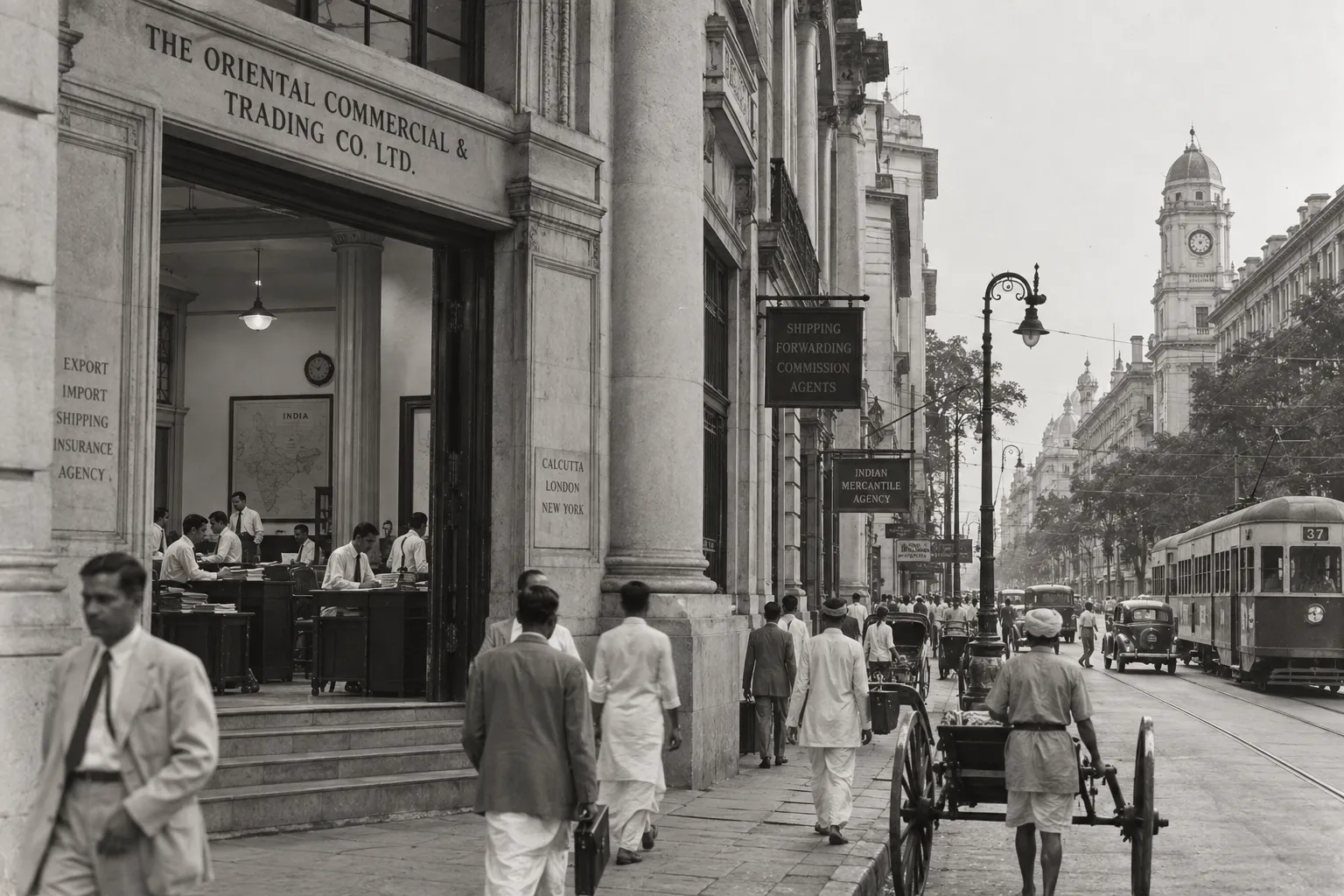
Calcutta was once one of British India’s great corporate command centres, where managing agencies directed businesses ranging from jute and tea to coal and shipping. After Independence, ownership changed, British firms receded, and Indian business groups expanded. The factories did not simply vanish; what gradually weakened was the city’s concentration of corporate power.
-
When the Bengali Merchant Disappeared from Bengali Literature
Bengali literature once gave merchants the scale of heroes: they owned ships, crossed seas and built fortunes through risk and adventure. By the twentieth century, the literary imagination had turned towards farmers, zamindars, clerks, professionals, workers and urban families. The merchant did not vanish from Bengal, but he gradually lost his place at the centre of its stories.
-
The Death of a River: Saraswati of Bengal
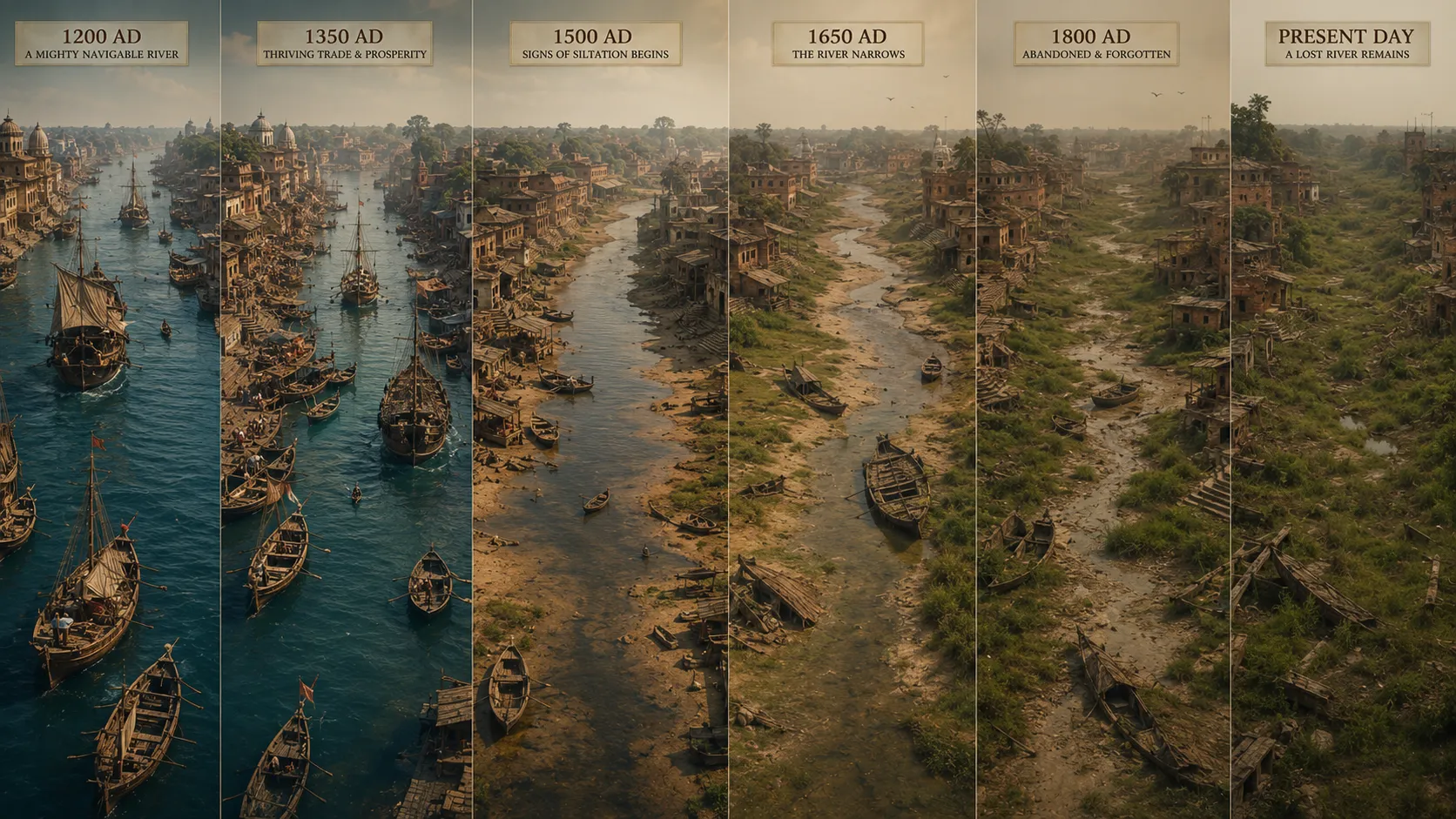
The Bengal Saraswati did not disappear in a single catastrophe. Sediment, shifting river channels, declining discharge and later human intervention gradually transformed a major waterway of southern Bengal. The river’s death unfolded over centuries, reshaping navigation, trade and settlement—and leaving behind a landscape where a once-important river survives in maps, memories and fragments.
-
The River That Changed Bengal's Capital
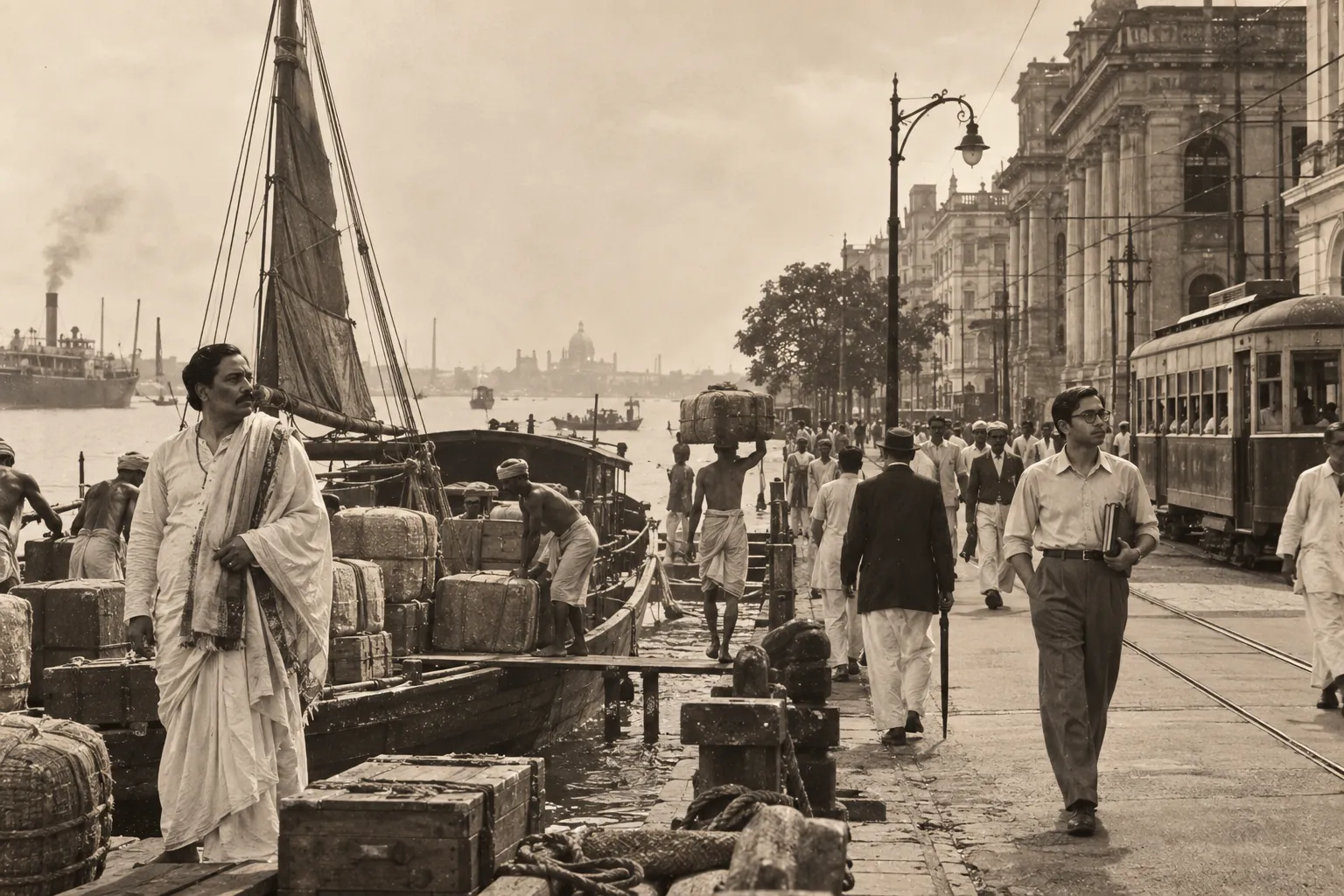
As the Bengal Saraswati weakened and the Hooghly became more important, Bengal’s commercial geography shifted downstream. Saptagram gradually lost its advantage as changing river channels made navigation harder, while Hooghly emerged as a stronger centre for maritime trade. This environmental shift helped reshape the network of ports and settlements from which Calcutta eventually emerged.
-
The River That Made Saptagram
Saptagram, on the Bengal Saraswati, grew into one of medieval Bengal's great commercial centres, gaining administrative and mint status under Muhammad bin Tughluq and drawing Portuguese merchants like Tomé Pires by the sixteenth century. As the Saraswati silted and trade shifted to the Hooghly, the city's advantage and its fortunes gradually declined together.
-
The River That Refused to Disappear
The Bengal Saraswati has vanished from much of the landscape, but its story survives in old maps, satellite images, buried sediments and the shape of the land itself. Tracing those fragments reveals not just a lost river, but the commercial world of Saptagram and the changing geography of southern Bengal that grew around its waters.
-
The Stones That Remembered Bengal
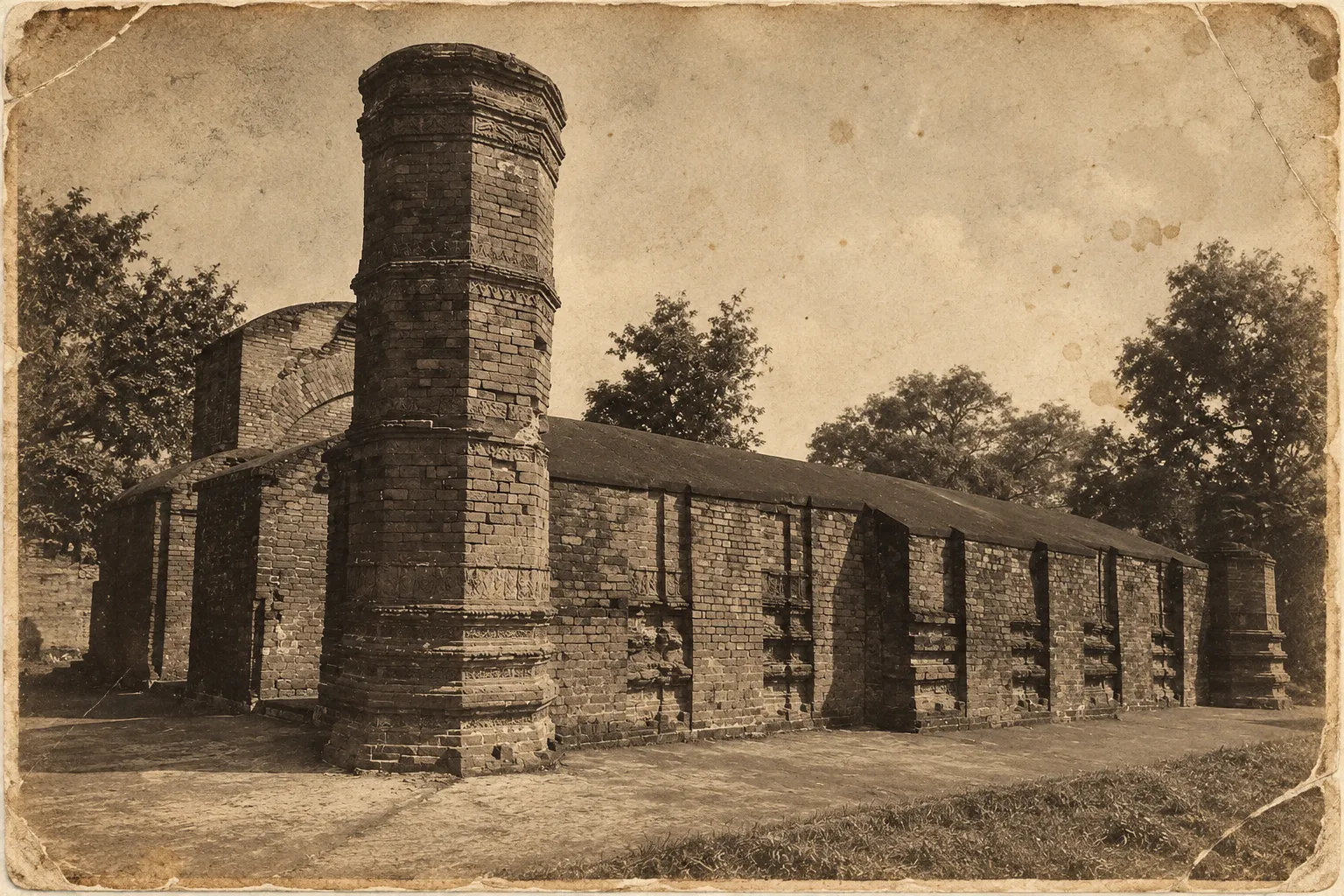
At Tribeni, the Zafar Khan Ghazi Mosque and Dargah preserves an extraordinary architectural record of Bengal’s changing past. Built in the late thirteenth century, its walls incorporate older religious and architectural fragments, including Sanskrit-inscribed stones and carved imagery, revealing how earlier cultural landscapes survived within a new political and religious order.
-
When the Saraswati Lived in Poetry
Long before the Bengal Saraswati became a lost river, Bengali literature had already made it part of a living world of ships, merchants, pilgrims and sacred places. From Bipradas Pipilai’s Manasamangal to Vrindavana Dasa’s Chaitanya Bhagavata, the river survives not as a map or measurement, but as part of Bengal’s cultural memory.
-
The Private Papers Behind the Partition of Bengal
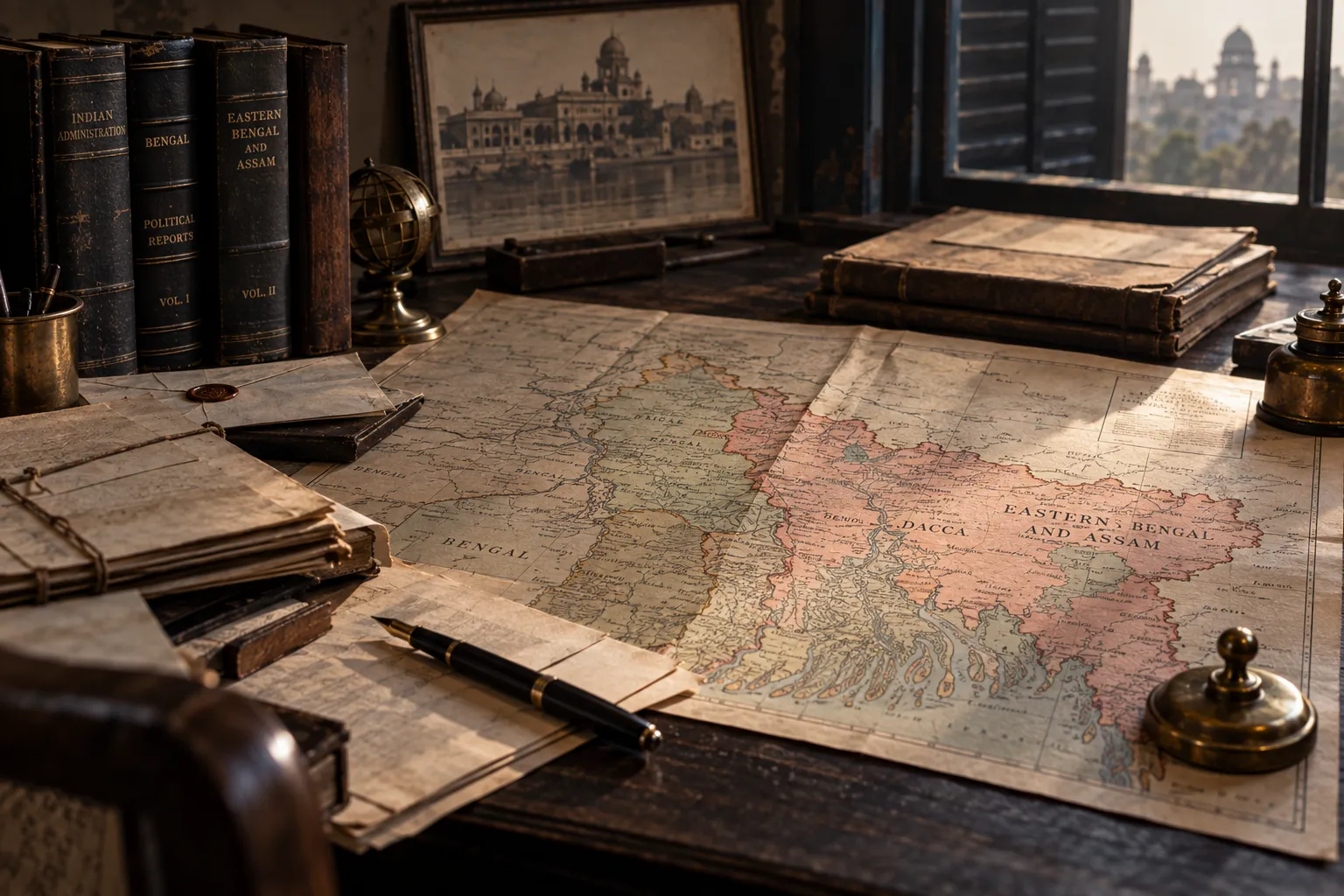
The British defended the 1905 partition of Bengal as an administrative necessity. But confidential correspondence among the officials shaping the new map reveals another consideration: they were thinking carefully about what might happen to Bengal’s political power once its eastern and western districts were no longer joined.
-
When Bengal Was Divided, Dacca Saw a Future
For many in western Bengal, the 1905 Partition looked like the destruction of a political homeland. In Dacca, some Muslim leaders saw something very different: a new province, a new capital and the possibility of political influence that had long seemed concentrated elsewhere.
-
How Did Garlic Become Part of Bengali Cooking?
Garlic is now familiar in Bengali cooking, but its place in the Bengali kitchen was not always straightforward. Ancient Indian traditions valued it medicinally, while some religious dietary codes prohibited it. Bengali cookbooks from the nineteenth and early twentieth centuries reveal a gradual change in culinary practice—showing how a contested ingredient eventually became part of Bengal's changing food culture.