Category
Culture, Language & Literature
Art, faith, food, performance, festivals, language, literature and the ways Bengal expresses itself.
-
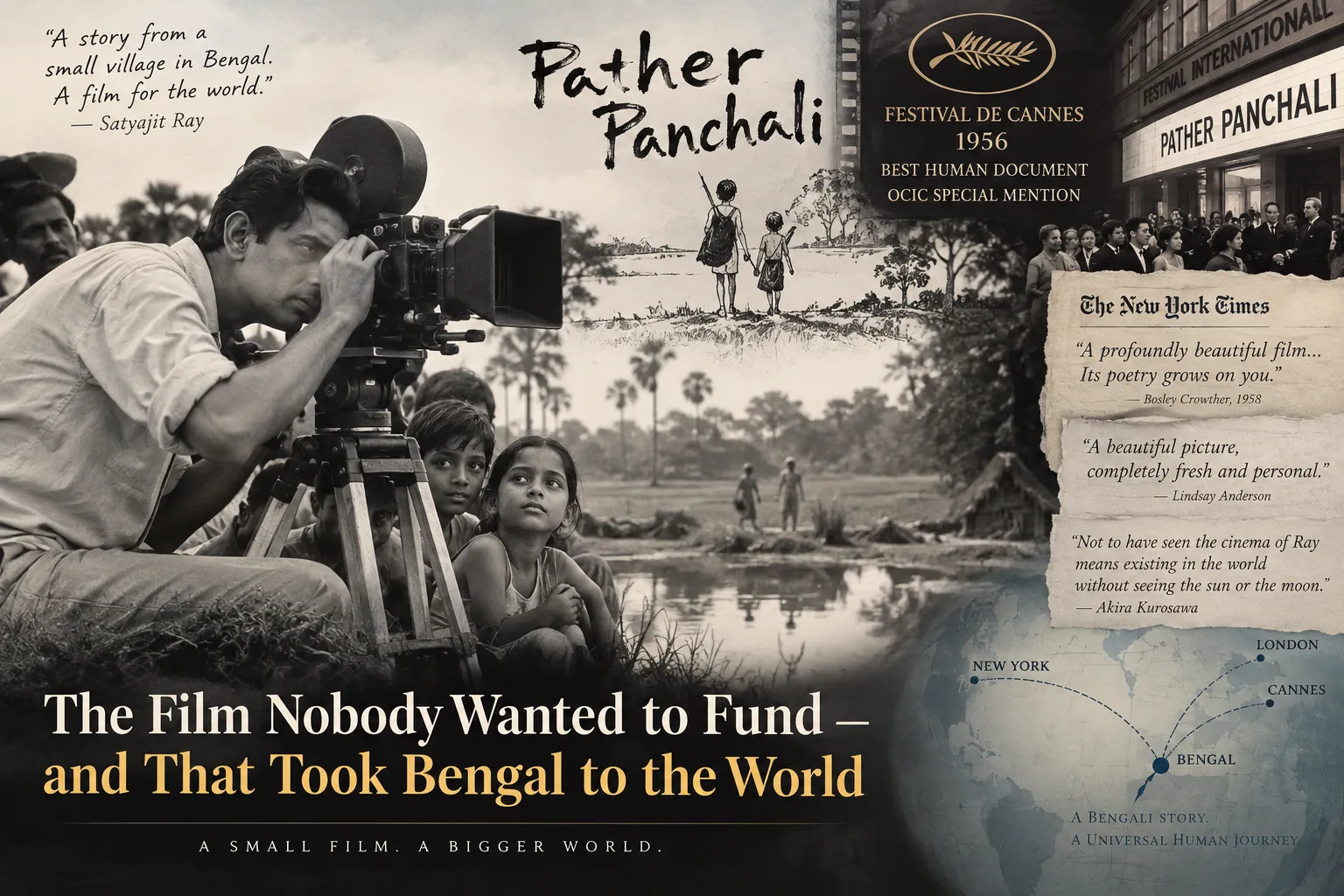
The Film Nobody Wanted to Fund — and That Took Bengal to the World
The making of Satyajit Ray’s Pather Panchali was a struggle from the beginning: money ran out, production stalled and the first-time filmmaker had to risk his family’s security to keep going. Then the film travelled from Bengal to Cannes and beyond, winning extraordinary acclaim while provoking serious criticism about poverty, pace and representation.
-
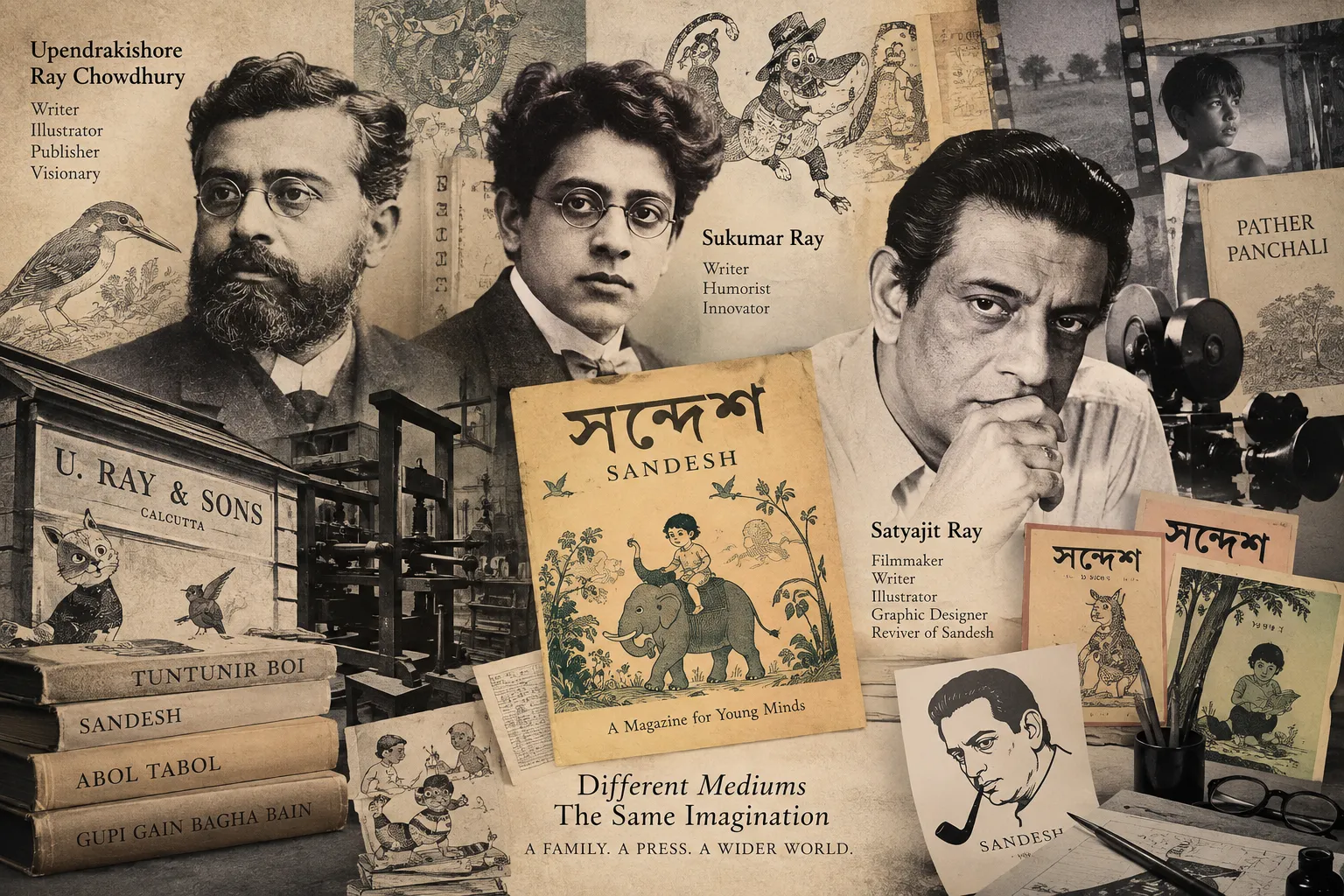
The Printing Press That Made Modern Bengali Imagination
Long before Satyajit Ray became a world-famous filmmaker, his family was reshaping how Bengal read and saw. From Upendrakishore Ray Chowdhury’s pioneering U. Ray & Sons press to Sukumar Ray’s illustrations and Satyajit’s revival of Sandesh, three generations carried the same creative inheritance across printing, literature, graphic design and eventually cinema.
-
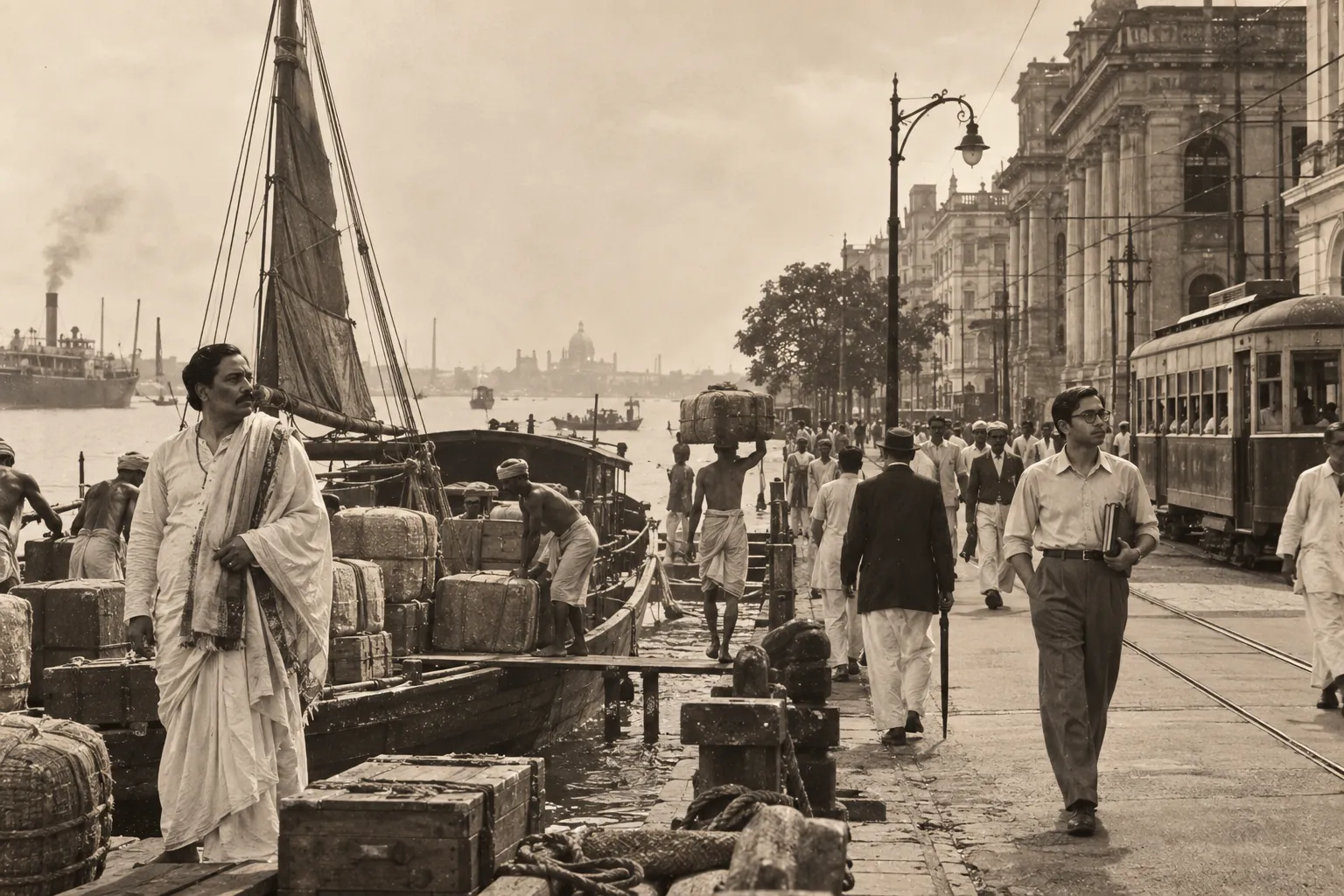
When the Bengali Merchant Disappeared from Bengali Literature
Bengali literature once gave merchants the scale of heroes: they owned ships, crossed seas and built fortunes through risk and adventure. By the twentieth century, the literary imagination had turned towards farmers, zamindars, clerks, professionals, workers and urban families. The merchant did not vanish from Bengal, but he gradually lost his place at the centre of its stories.
-
When the Saraswati Lived in Poetry
Long before the Bengal Saraswati became a lost river, Bengali literature had already made it part of a living world of ships, merchants, pilgrims and sacred places. From Bipradas Pipilai’s Manasamangal to Vrindavana Dasa’s Chaitanya Bhagavata, the river survives not as a map or measurement, but as part of Bengal’s cultural memory.
-
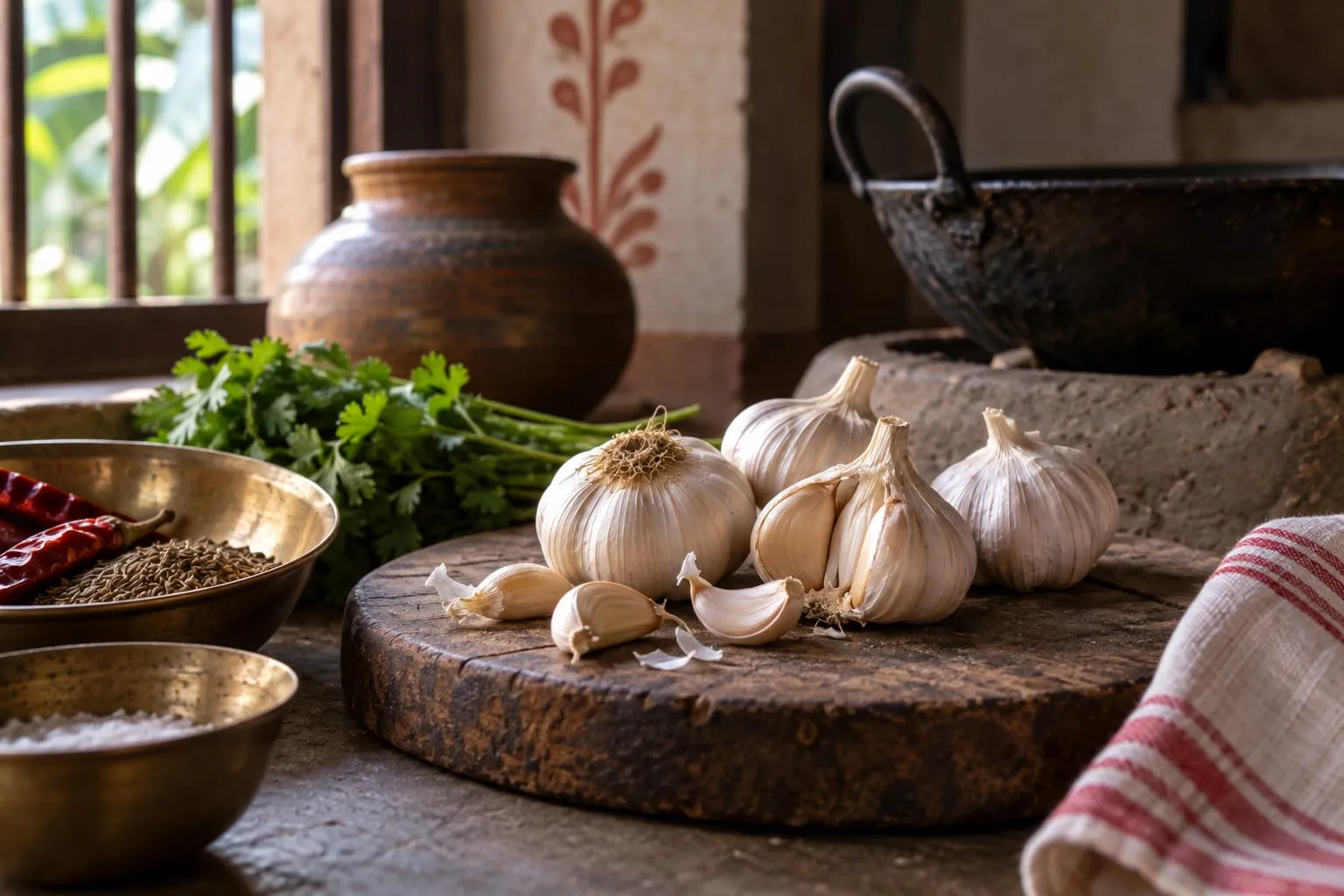
How Did Garlic Become Part of Bengali Cooking?
Garlic is now familiar in Bengali cooking, but its place in the Bengali kitchen was not always straightforward. Ancient Indian traditions valued it medicinally, while some religious dietary codes prohibited it. Bengali cookbooks from the nineteenth and early twentieth centuries reveal a gradual change in culinary practice—showing how a contested ingredient eventually became part of Bengal's changing food culture.